Buy spacecampus-paris.eu ?
We are moving the project
spacecampus-paris.eu .
Are you interested in purchasing the domain
spacecampus-paris.eu ?
domain@kv-gmbh.de · 0541-91531010
Buy spacecampus-paris.eu ?
How do you calculate probabilities with two probabilities?
To calculate the probability of two independent events occurring, you can use the formula P(A and B) = P(A) * P(B), where P(A) and P(B) are the probabilities of each event occurring. If the events are not independent, you can use the formula P(A and B) = P(A) * P(B|A), where P(B|A) is the probability of event B occurring given that event A has already occurred. If you want to calculate the probability of either event A or event B occurring, you can use the formula P(A or B) = P(A) + P(B) - P(A and B) to account for the overlap between the two events. **
What are probabilities?
Probabilities are numerical measures that quantify the likelihood of a specific event occurring. They range from 0 (indicating impossibility) to 1 (indicating certainty). Probabilities help us make informed decisions by providing a way to assess the likelihood of different outcomes. They are used in various fields such as mathematics, statistics, and science to analyze uncertainty and randomness. **

Similar search terms for Probabilities
Top-Angebote
Products related to Probabilities:
-
Uplifted Finds Interactive Ring Toss Training System Professional Early Education & Pediatric Fitness Infrastructure Interactive Ring Toss Training System Professional Early Education & Pediatric Fitness InfrastructureCommand ultimate developmental confidence with the Interactive Ring Toss Training System, a highperformance educational solution specifically engineered to act as a comprehensive tool for elite organization and superior technical ergonomics. Built...52,97 $*Shipping: 0,00 $Secure redirect to the provider
-
Uplift Essentials Long Nylon Training Lead Heavy Duty Outdoor Exploration & Recall Leash 3mMaster distance training and provide your pet with controlled freedom using our Professional Long Nylon Training Lead. Engineered for versatility and durability, this hightensile leash is the ultimate tool for outdoor hiking, recall practice, and...44,97 $*Shipping: 0,00 $Secure redirect to the provider
-
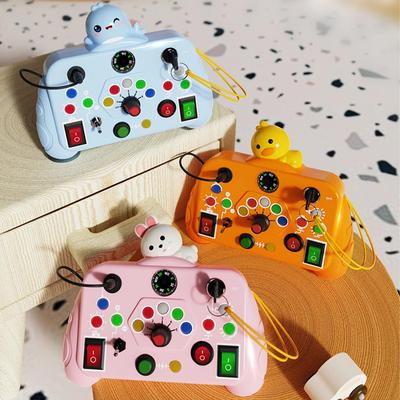
Smart Shopping Spot Montessori Busy Machine, Early Education Cognitive Game, Hand Eye Coordination Exploration Toys For Kids orangeEncourage Cognitive Growth with Montessori Busy Machine The Kids Montessori Busy Machine is an interactive toy designed to promote early learning through fun and exploration. This cognitive game challenges young minds while developing essential...34,97 $*Shipping: 0,00 $Secure redirect to the provider
-
Smart Shopping Spot Montessori Busy Machine, Early Education Cognitive Game, Hand Eye Coordination Exploration Toys For Kids blueEncourage Cognitive Growth with Montessori Busy Machine The Kids Montessori Busy Machine is an interactive toy designed to promote early learning through fun and exploration. This cognitive game challenges young minds while developing essential...34,97 $*Shipping: 0,00 $Secure redirect to the provider




-
What are birthday probabilities?
Birthday probabilities refer to the likelihood of two or more people sharing the same birthday in a group. This concept is often used in probability and statistics to demonstrate the counterintuitive nature of probability. The birthday paradox, for example, shows that in a group of just 23 people, there is a greater than 50% chance that two people will share the same birthday. This is due to the large number of possible pairings and the relatively small number of days in a year. **
-
How do you calculate probabilities?
Probabilities are calculated by dividing the number of favorable outcomes by the total number of possible outcomes. This can be represented as a fraction, decimal, or percentage. In some cases, probabilities can also be calculated using mathematical formulas or statistical methods. It is important to ensure that all possible outcomes are accounted for when calculating probabilities to obtain an accurate result. **
-
What are probabilities in mathematics?
Probabilities in mathematics represent the likelihood of a specific event occurring. They are typically expressed as a number between 0 and 1, where 0 indicates impossibility and 1 indicates certainty. Probabilities can be calculated using various methods such as counting outcomes, using formulas like the probability mass function or probability density function, or through simulations. Understanding probabilities is essential in fields such as statistics, finance, and science to make informed decisions based on the likelihood of different outcomes. **
-
How can probabilities be determined?
Probabilities can be determined by analyzing the likelihood of different outcomes occurring based on available information and data. This can involve using mathematical formulas, statistical analysis, and historical data to calculate the probability of a specific event happening. Probabilities can also be determined through experimentation and observation, where repeated trials can help estimate the likelihood of an event occurring. Additionally, probabilities can be influenced by factors such as randomness, uncertainty, and the presence of variables that may affect the outcome. **


What are probabilities in math?
Probabilities in math represent the likelihood of a specific event occurring. They are typically expressed as a number between 0 and 1, where 0 indicates impossibility and 1 indicates certainty. Probabilities can be calculated using various methods, such as counting outcomes, using formulas like the probability mass function or probability density function, or through simulations. Understanding probabilities is essential in various fields, including statistics, finance, and science, as they help in making informed decisions and predictions based on uncertain outcomes. **
How are conditional probabilities calculated?
Conditional probabilities are calculated by dividing the probability of the intersection of two events by the probability of the given condition. This can be expressed as P(A|B) = P(A and B) / P(B), where P(A|B) is the conditional probability of event A given event B has occurred, P(A and B) is the probability of both events A and B occurring, and P(B) is the probability of event B occurring. This formula allows us to calculate the likelihood of one event occurring given that another event has already occurred. **
Top-Angebote
Products related to Probabilities:
-
Smart Shopping Spot Montessori Busy Machine, Early Education Cognitive Game, Hand Eye Coordination Exploration Toys For Kids pinkEncourage Cognitive Growth with Montessori Busy Machine The Kids Montessori Busy Machine is an interactive toy designed to promote early learning through fun and exploration. This cognitive game challenges young minds while developing essential...34,97 $*Shipping: 0,00 $Secure redirect to the provider
-
Research-powered Eye Duo - Skincare Kit Charlotte Tilbury 3315 Charlotte's Research-powered Eye Duo Size:Darlings, unlock the secret to eyes that appear brighter, depuffed, smoother and younger with my Research-Powered Eye Duo! This CharlotteTilbury.com EXCLUSIVE skincare duo includes:94,05 £*Shipping: 0,00 £Secure redirect to the provider
-
Uplifted Finds Interactive Ring Toss Training System Professional Early Education & Pediatric Fitness Infrastructure Interactive Ring Toss Training System Professional Early Education & Pediatric Fitness InfrastructureCommand ultimate developmental confidence with the Interactive Ring Toss Training System, a highperformance educational solution specifically engineered to act as a comprehensive tool for elite organization and superior technical ergonomics. Built...52,97 $*Shipping: 0,00 $Secure redirect to the provider
-
Uplift Essentials Long Nylon Training Lead Heavy Duty Outdoor Exploration & Recall Leash 3mMaster distance training and provide your pet with controlled freedom using our Professional Long Nylon Training Lead. Engineered for versatility and durability, this hightensile leash is the ultimate tool for outdoor hiking, recall practice, and...44,97 $*Shipping: 0,00 $Secure redirect to the provider
-
How do you calculate probabilities with two probabilities?
To calculate the probability of two independent events occurring, you can use the formula P(A and B) = P(A) * P(B), where P(A) and P(B) are the probabilities of each event occurring. If the events are not independent, you can use the formula P(A and B) = P(A) * P(B|A), where P(B|A) is the probability of event B occurring given that event A has already occurred. If you want to calculate the probability of either event A or event B occurring, you can use the formula P(A or B) = P(A) + P(B) - P(A and B) to account for the overlap between the two events. **
-
What are probabilities?
Probabilities are numerical measures that quantify the likelihood of a specific event occurring. They range from 0 (indicating impossibility) to 1 (indicating certainty). Probabilities help us make informed decisions by providing a way to assess the likelihood of different outcomes. They are used in various fields such as mathematics, statistics, and science to analyze uncertainty and randomness. **
-
What are birthday probabilities?
Birthday probabilities refer to the likelihood of two or more people sharing the same birthday in a group. This concept is often used in probability and statistics to demonstrate the counterintuitive nature of probability. The birthday paradox, for example, shows that in a group of just 23 people, there is a greater than 50% chance that two people will share the same birthday. This is due to the large number of possible pairings and the relatively small number of days in a year. **
-
How do you calculate probabilities?
Probabilities are calculated by dividing the number of favorable outcomes by the total number of possible outcomes. This can be represented as a fraction, decimal, or percentage. In some cases, probabilities can also be calculated using mathematical formulas or statistical methods. It is important to ensure that all possible outcomes are accounted for when calculating probabilities to obtain an accurate result. **
Similar search terms for Probabilities
-
Smart Shopping Spot Montessori Busy Machine, Early Education Cognitive Game, Hand Eye Coordination Exploration Toys For Kids orangeEncourage Cognitive Growth with Montessori Busy Machine The Kids Montessori Busy Machine is an interactive toy designed to promote early learning through fun and exploration. This cognitive game challenges young minds while developing essential...34,97 $*Shipping: 0,00 $Secure redirect to the provider
-
Smart Shopping Spot Montessori Busy Machine, Early Education Cognitive Game, Hand Eye Coordination Exploration Toys For Kids blueEncourage Cognitive Growth with Montessori Busy Machine The Kids Montessori Busy Machine is an interactive toy designed to promote early learning through fun and exploration. This cognitive game challenges young minds while developing essential...34,97 $*Shipping: 0,00 $Secure redirect to the provider
-
Research-powered Eye Duo - Skincare Kit Charlotte Tilbury 3291 Charlotte's Research-powered Eye Duo Size:Darlings, unlock the secret to eyes that appear brighter, depuffed, smoother and younger with my Research-Powered Eye Duo! This CharlotteTilbury.com EXCLUSIVE skincare duo includes:94,05 £*Shipping: 0,00 £Secure redirect to the provider
-
Uplift Essentials Long Nylon Training Lead Heavy Duty Outdoor Exploration & Recall Leash 6mMaster distance training and provide your pet with controlled freedom using our Professional Long Nylon Training Lead. Engineered for versatility and durability, this hightensile leash is the ultimate tool for outdoor hiking, recall practice, and...49,97 $*Shipping: 0,00 $Secure redirect to the provider
-
What are probabilities in mathematics?
Probabilities in mathematics represent the likelihood of a specific event occurring. They are typically expressed as a number between 0 and 1, where 0 indicates impossibility and 1 indicates certainty. Probabilities can be calculated using various methods such as counting outcomes, using formulas like the probability mass function or probability density function, or through simulations. Understanding probabilities is essential in fields such as statistics, finance, and science to make informed decisions based on the likelihood of different outcomes. **
-
How can probabilities be determined?
Probabilities can be determined by analyzing the likelihood of different outcomes occurring based on available information and data. This can involve using mathematical formulas, statistical analysis, and historical data to calculate the probability of a specific event happening. Probabilities can also be determined through experimentation and observation, where repeated trials can help estimate the likelihood of an event occurring. Additionally, probabilities can be influenced by factors such as randomness, uncertainty, and the presence of variables that may affect the outcome. **
-
What are probabilities in math?
Probabilities in math represent the likelihood of a specific event occurring. They are typically expressed as a number between 0 and 1, where 0 indicates impossibility and 1 indicates certainty. Probabilities can be calculated using various methods, such as counting outcomes, using formulas like the probability mass function or probability density function, or through simulations. Understanding probabilities is essential in various fields, including statistics, finance, and science, as they help in making informed decisions and predictions based on uncertain outcomes. **
-
How are conditional probabilities calculated?
Conditional probabilities are calculated by dividing the probability of the intersection of two events by the probability of the given condition. This can be expressed as P(A|B) = P(A and B) / P(B), where P(A|B) is the conditional probability of event A given event B has occurred, P(A and B) is the probability of both events A and B occurring, and P(B) is the probability of event B occurring. This formula allows us to calculate the likelihood of one event occurring given that another event has already occurred. **
* All prices are inclusive of VAT and, if applicable, plus shipping costs. The offer information is based on the details provided by the respective shop and is updated through automated processes. Real-time updates do not occur, so deviations can occur in individual cases. ** Note: Parts of this content were created by AI.